
Naturalistic Observation
When I was in the throes of alcohol and substance abuse, I had no principles to speak of, other than a mantra borrowed from a Janis Joplin song: “get it while you can.” I had a deep spiritual longing, but all I knew were unsettling diabolical experiences, risky sexual and romantic encounters, ‘new-age’ superstitions, drunks and drug trips, and a threadbare childhood Catholicism that I had since discarded. Yet there was one bright, quiet place in the bewildering storm that was my life: drawing.
I had always had a passion for drawing and painting, and had worked hard at it throughout my young life. Even when it seemed there was nothing else for me, there was drawing. I believe it was an invisible thread that tied me to God, even though I didn’t realize it. The reason drawing was such a grace for me is that drawing, particularly drawing from observation, requires one to slow down, and look–ever so carefully–at what is really there. Even though I was delusional, dishonest, deceptive and deceived most of the time–I wasn’t while I was drawing.
Since I was a painting major, I had assignments every week. On a regular basis (provided I could temporarily sober-up enough to do it), I had to draw 10-20 hours to come up with work that wouldn’t absolutely embarrass me during the critiques. My favorite professor, Zhi Lin, was from China, and his tactic of harsh public scrutiny was highly motivating.
During those hours of intensive drawing, the dark mental clouds would part, and I would experience something like peace. This was the one activity in my life that put me in touch, intellectually and physically, with reality. Objects in space. The structure of things. Human anatomy. The principles of light. Form. Gravity. Empathy. Those things were the focus of my attention. Without realizing what I was doing, I submerged myself in the Mind of the Creator. Only while drawing, did I find the means to focus attentively, rationally, and with full concentration, on the nature of things; the spiraling musculature of a leg, the mountainous topography of a cloth, the cool impartiality of light falling across a surface. These complexities could only be realized by marking down facts with rigorous honesty, diligence and restraint.
I remember once looking up from my easel, tears streaming down my face. I was overwhelmed by the realization of how ordered it all was–even this chance arrangement of objects strewn around in my chaotic apartment–and how loving was that order. All the mess and mundanity and meanness was somehow designed…somehow, willed. It was inescapable.
Years later, as I was teaching and mentoring artists, I observed a similar effect on the minds of my students. Over time, and in subtle ways, I saw people become more emotionally stable, more mentally sound–more wise– as they made drawing an important part of their routine. I attribute this to the attentive observation of reality; certain attitude of appreciation, the judicious comparison of values, the pursuit of beauty in truth, and truth in beauty. For many of my students, drawing was as close a thing to prayer and mediation as they had ever come.
Drawing was a life-line for me. Still is sometimes. When I’m getting a little disoriented, my husband will ask, “have you done any drawing lately?” He knows. Whether you have any interest in trying it for yourself, I think it proves that Dr. Baars was right (see previous post). I cannot overstate the importance of regular, deep encounters with nature, behind which is God, patiently revealing Himself. I we want to conform ourselves to the Mind of God, we must pay attention to nature, and learn of Him through it. “Consider the lillies…” as our Lord said.
This includes looking carefully at our inner nature, too. We must be attentive to what passes through our interior landscape like weather passing through the sky. We must attend to the thoughts and feelings and images that come into our minds. We are responsible for what we do with them. How are we to handle them?
A Hedonist Tries to Meditate
This may seem like a long aside, but bear with me. It is impossible for me to separate my marriage vocation from my primary vocation: to know and do the will of God. This became the central fact of my life at each stage of my conversion, of which figuring out how to grow up and marry was the most recent. My story is pretty dramatic. Yours might not be, but I hope that the bold outlines I’m sketching here will help you see your own situation a little more clearly.
Just as I was reaping the rewards of observing the natural world during my drawing time, I was also becoming aware of an increasing discordance between how I was living, and the truths of nature. The most glaring problem was that I could not paint or draw well while drunk.
This fact became more and alarming and embarrassing, as my professors began to notice my erratic behavior and performance. Worst of all, I knew there was something wrong with me, but I did’t know what it was. Drunkenness and blackouts and humiliations and broken relationships and confusion and misery and terror were all symptoms, but what was the cause? I couldn’t see anything clearly.
I would spend hours in book stores looking for psychology, self-help and new-age spirituality books to try and figure out what was wrong with me. I would take a ‘break’ from drinking, only to reward myself by getting hammered. I met a lot of wacky ‘spiritual’ people and interviewed them constantly trying to find answers. At the end of the day, I would run back to my usual comforts.
My inner life was getting darker and darker. Somewhere, some lunatic I found intriguing had given me a book about Tibetan Buddhism. I entertained the idea out of curiosity. Some time later, at a festival in the desert, I had a terrifying hallucinogenic drug trip. I saw myself surrounded by lurid masks of falseness and deception. Everywhere I turned, demonic faces mocked me for being so foolish as to fall for these phony illusions. I saw that I, too, was a mask-wearer, a faker, a deceived deceiver. It was all a drug-induced, paranoid reaction of course, but I could never quite shake the suspicion that these accusations were based in reality. In vino, veritas.
Months later, I described my experience to an acquaintance who had been there at the time, and had seen me freaking-out. I told him what I was learning about Buddhism, too. This man had a degree in Eastern Philosophy from (the nominally Catholic) Seattle University. He was a large, somber and impressive fellow. He could have been an image of St. Thomas Aquinas, if he had been a Catholic. Perhaps he secretly was. After listening to my experience, he laconically advised me to stay away from Buddhism. I was too ‘Western’ for it, he said. I would have a bad fall.
I later ruminated on the Buddhist conception of hell, complete with levels of torment specific to one’s particular moral failings. I shuddered at the hell of the Hungry Ghosts, where the shades of intemperate men and women wander through a psychic wasteland after death, their bellies swollen with hunger and thirst, tormented by having mouths too small to receive any nourishment. I cooled off on the whole Buddhist thing, but that image stayed in my mind.
Around the same time, I found a book about the so-called ‘lost gospel of Mary Magdalene,’ which analyzed fragments of esoteric poetry about floating up to various ecstatic levels and talking to angels, etc. It was off-center, yes, but at least it was better than the Satanic Witch, which had been my favorite book a few years before. The Magdalene book, apocryphal as it was, started me thinking again about Christianity, if only in a sort of hazy, metaphorical way.
My Confirmation saint had been Mary Madelene. I remembered the traditional image of her, alone and naked in the wilderness, living a life of penitence and prayer, with nothing but ‘The Bread of Angels’ to sustain her. Like the Hungry Ghosts, The Magdalen was in the wilderness, too, yet she was not tormented by her hunger. Something did sustain her. She was lifted up to glory. She was rescued.
At that point, something began to pull me towards the notion of asceticism. I had a vague idea of what asceticism was from Catholic school. I knew it was far from the hedonistic life I had chosen for myself. Flashes of Siddhartha, which we had covered in my Jesuit high school curriculum, came back to me. I began to wonder if I could ever walk a nobler path.
Moved by the romantic image of The Magdalen, I quit drinking and drugs, this time for almost a month. I felt beautiful. The morning after I ordered one glass of wine at a poetry club, certain I could now drink like a lady, I woke up on the floor in some strange man’s apartment. All the spiritual books I’d been reading were flawed, but they contained bits of truth, and occasionally, these bits of truth rose up in me like bile. As I tumbled back out into the cacophony of the bars and nightclubs, inwardly, I ruminated on these things.
This continued on after graduation. When I got a job in a restaurant, things shifted a bit. The job was demanding and I could not be loaded at work. I could get loaded immediately after work (everyone else did), but not before my shift. I couldn’t even get stoned. It had taken me months to find any job at all, and I didn’t want to this one. So I resolved to delay my drinking just until after the shift, when I could step over to the bar next door, cash tips in hand. Those restaurant shifts afforded me a modicum of enforced sobriety several days of the week. The fact that the work was physical and I couldn’t smoke weed the way I did during school probably helped, too. It gave me just enough daylight to see more and more of what was going on.
Once, during those few months, an elderly Jesuit priest, Fr. Paul Fitterer, who had been the rector at my high school, came into the restaurant. He had helped me once when I was in my teens, and suffering from demonic affliction, which I had acquired through dabbling in the occult. His blessing hadn’t made the demons go away, since I wasn’t willing to repent from what I was doing. Yet, seeing him in the restaurant was a reminder of grace. Maybe he prayed for me that day.
Watching the Watcher
Somewhere in the miasma of that period, I got the notion to give meditation a try. The Christian tradition of meditation, or what we Catholics refer to as ‘mental prayer,’ was still far from my awareness. I didn’t want to become a Buddhist, yet as my inner conflict increased, the idea of seeking some means of detachment seemed intriguing.
I had a big, high-backed chair the corner in my studio apartment. Everyday, I would sit up in my chair with my feet on the floor and my hands in my lap, take a few deep breaths, and I would do this:
Watch my thoughts.
Thats it. I would watch my thoughts come and go like clouds rolling across the sky. I wouldn’t try to change them. I watched feelings and images go sailing by, too. I let them go. I resisted the urge to chase them. If emotions came up or if I cried, I would sit still, and let that happen, too. I focused on relaxing, breathing, and letting it go. This was simple, but not that easy. It took a lot of effort to let my thoughts and feelings pass through me without doing anything with them. As a result of trying to let my thoughts go by without clinging to them, I soon saw myself watching myself watching my thoughts.
I didn’t know it, but this is what has been labeled in the psychology world as metacognition. All jargon aside, this kind of thing has been going on for a long time. I think all wise people do this at some level, because watching our thoughts, without taking action, allows us to rise up out of our passions and look at ourselves at a distance.
It was as if learning to pause, and pay attention to what was happening inside, put a tiny bit of ‘space’ between my fears and appetites and the next action I might take. It allowed me to look at my thoughts objectively, to wonder if they were really accurate or not, or if they were really all that important. Rather than unconsciously reacting to every impulse, I slowly became aware of myself. I discovered that it is okay to feel various emotions, even unpleasant ones, without trying to escape or evade them. I found out I could experience cravings, appetites and fears, without having to do anything to ‘fix’ them. Pretty soon, I found myself waiting several minutes before reaching for the next cigarette. Soon it was hours. Before long, tolerating inner discomfort long enough to actually break an addiction became a real possibility for me.
The Big Book of Alcoholics Anonymous says “…we pause, when agitated or doubtful, and ask for the right thought or action. We constantly remind ourselves we are no longer running the show, humbly saying to ourselves many times each day ‘Thy will be done.'” (pg 87)
Sitting in my chair a few minutes a day, watching my thoughts, delaying gratification, I was not far from embracing “Thy will be done.” I had not yet learned to pray, but I was at least learning to pause. It wasn’t long before I was using these times of inward observation to evaluate my thoughts and feelings, to wonder what was driving them. I started to visualize what it would look like if I were a different kind of person; the kind of person I secretly wanted to be. What would I wear? How would I carry myself? What would I be busy about? What would I do with my hands?
A Growing Awareness
Until I was able to step out of myself, or stand above myself and observe my thoughts, feelings and actions objectively, I could not develop the inner vision that I needed to put my life in order. I couldn’t even see what I really wanted in life, much less change my behavior to get there. Once I began to pause, turning an inner-eye on my heart, I began to see choices set before me. Choices for good or for ill. This was a revolution in awareness.
Am I recommending that you look to Buddhism for the key to your problems? Certainly not. Although the Buddhist tradition demands temperance, sobriety, self-control and other virtues to which all men should aspire, the goals of Buddhism and Christianity are diametrically opposed. The end-game for Buddhism is total detachment from all things, even the notion of God (which shows the subtle atheism that underlies Buddhist philosophy), and a final ascent to a state of perfect non-being, known as Nirvana. Last time I checked, the God of Christianity is the opposite of non-being: He is Being qua Being; He is our Father, who lovingly condescends to share His Being with us, if we will accept. Rather than the decidedly negative goal offered by Buddhism: to escape the fate of endless reincarnation and wearisome existence by seeking ultimate non-existence, our final reward as Christians is eternal life, experienced in divine intimacy with our Lord, a joy multiplied and reverberated within the Communion of Saints, our heavenly family. In other words, heaven is something like marriage and family life, yet magnified in goodness beyond compare.
Perhaps, had I not been baptized and raised in some kind of Catholic milieu, I would have been amenable to dismissing all thoughts and images that came to my mind as illusions, trusting only in the reality of an abyss of non-being at the end of the tunnel. For me, given the choice between Ultimate Being and ultimate non-being, Being wins every time. Once I started to make enough space inside myself to observe what was there, the Reality of my Creator began to appear in my heart like a Star in the darkness. I made a choice to follow that Star and I have never stopped.
What does all this have to do with attraction or dating?
What I’m talking about now are first principles. I am talking about awareness. What was needed before I could figure out how to grow up and marry, was a change of inner attitude. I had to drop the illusions and delusions that contradicted my God-given nature, and recover the true vision of my heart; the image placed there by my Creator; the blueprint for my own human flourishing.
For me, it wasn’t that I had no relationships with the opposite sex–I had many affairs. The problem was that I could never attract the kind of person that was really marriage minded–or actually appropriate for me. Because I lacked awareness, I could not see the truth about what I was doing to sabotage myself. I thought I was being honest, but I was usually driven by ideas and fears that weren’t grounded in reality.
Even when I had been sober for years, a practicing Catholic and committed to the virtue of chastity, I still kept creating relationships that were taking me away from my marriage goal, instead of towards it. I found myself doing what I did not want to do, dropping my standards, time and again, and getting wounded. I was working against my own nature. It took a deeper awareness for me to be able to reinvent my way of acting around men; to behave in a manner true to my authentic nature, to show what I truly wanted and valued in my heart; to be a woman. In a nutshell, that’s what my personal dating program was all about.
Getting Down to Earth
Men and women are different, so the suggestions I’m going to make in the rest of this series on attraction will be increasingly gender specific, with different advice for men and women. We must observe and appreciate the differences between men and women in order to apply the principles of attraction I am going to propose here. We will probably need to step outside of our comfort zones in putting these principles into practice. This is even more true if our prior beliefs about men and women have kept us isolated, defensive or avoidant. Yet, with practice, these tools will become second nature. Soon you will learn to handle each dating situation with grace and magnanimity.
Fair warning: will have to generalize in order to do this. If you are likely to be offended by talk of ‘men are like this’ and ‘women are like that’–well, we’re going to do a lot of it. I would suggest looking very carefully inside at why this feels like a problem for you. Where is this reaction coming from? Is it helpful to your goal of learning how to date or navigate relationships more effectively? Are you willing to set aside your ideas and try something different to see what happens? You may want to visit “Objections and the Set Aside Prayer” if you’re struggling with this.
The dating philosophy that made all the difference in my life, and what I have to share with you now, is built upon the fact that men and women are different, tend to think and act differently, and are bringing different gifts to the table. It also supposes that these differences are precisely what attract men and women together. It is our difference, our complimentary, that makes relationships between the sexes so dynamic and fruitful. As long as we neglect, reject or suppress these differences, we dull our ability to attract and feel attracted to the opposite sex. Yet, when we learn to appreciate these differences and work with them, we find a whole new world of male-female dynamics opening up.
This awareness is what made dating, for me, a fascinating adventure–not some kind of power struggle, or embarrassing exercise in rejection. Every date, whether I felt a particular attraction to the person or not, became ‘a walk in the park’ on so many levels. In harmony with what Dr. Baars suggests, I learned to treat each date as an occasion to observe nature, to see and appreciate reality, to practice awareness. This means awareness of the natural and spiritual principles at play on a date, awareness of the choices set before me in any given moment, awareness of qualities in the other person and in my environment; awareness of the fascinating dynamics that exist between men and women. Framed this way, dating became a means of discovery, growth and healing for me. Each date, even with the man who became my husband, was an experiment that I willingly chose to conduct. Each set of findings, carefully gathered in the light of faith, brought me closer and closer to the goal of marriage, and the realization of God’s plan within it. I’m going to show you how to do this yourself in the coming posts.
Your Inner Vision
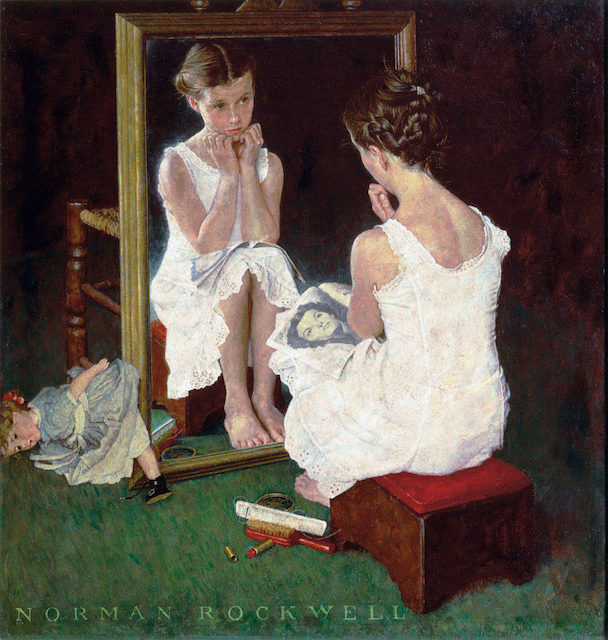
Before we dive into the nuts and bolts (birds and bees?) of attraction, let me leave you with a little exercise. St. Thomas Aquinas said that in order for a person to understand something, or even to think about it, he must be able to picture it in his mind. Below, I describe a procedure to help you think deeply about your own particular problems with attraction, dating, marriage and the other issues we’ve been talking about.
Remember that the imagination can be deceived, so it’s important not to rush to judgement about dreams and visions and this sort of thing. Yet for me, investigating the information that comes into my heart (imagination/mind/emotional center), especially in relationship to prayer, has been one of the keys to my deliverance, recovery and transformation. I have found it critical at various times to invite God into my heart, and help me visualize a ‘heart picture’ about the things that I am trying to understand about myself and my situation. “Sometimes,” as Blaise Pascal said, “the heart has reason of which reason knows nothing.”
Another reason to use visualization is that it can help us perform a challenging or high-pressure task. That’s why Olympic skiers are often seen at the top of the hill with their eyes closed, mentally rehearsing the twists and turns they are about to take, as vividly as they can, before heading down the slope. As another example, I practiced hours upon hours of visualization to prepare for childbirth. And do you know what? It works. Have you ever tried this about dating? I did. A lot. Visualization is key for successful performance, problem solving, and achieving goals. Adding prayer to this, we ask God to inspire and direct our imagination, and strengthen us to do our best.
Directions for a ‘Heart-Picture’ Exercise
Sit up in a comfortable seat, rest your hands loosely on your lap, with feet on the ground, making sure your arms and legs are uncrossed. Close your eyes, take a few deep breaths and relax your body. Briefly begin in the usual way you would for mental prayer, i.e. ask God to be with you and bless this time of meditation, etc. Catholics will want to begin with the Sign of The Cross, and some familiar prayers, such as an Our Father, Hail Mary and Glory Be.
Now prepare to look into your heart, as if you were looking through a window to the inside of yourself, to the innermost chamber, where only you and God can see. In the Presence of God, ask yourself any one of the following questions. Let yourself picture the answer in your heart as vividly as possible:
+What would it look like for me to attract (and feel attracted to) the opposite sex, while remaining chaste and virtuous? How would I carry myself? How would I dress? How would I speak?
+What would it look like if I were the kind of person who is successful in dating? Who enjoys going on lots of dates?
+What would it look like to be honest and vulnerable on a date?
+What would it look like to practice spiritual principles on a date?
+What would it look like to genuinely enjoy a date with someone, even if I am not particularly attracted to that person? How would the date end?
+What would it look like to be on a date with someone I feel extremely attracted to, without dropping any of my moral principles? How would the date end?
Ask whatever other questions come to mind. Use your imagination to place yourself in various situations as you examine these questions. It’s like making a little movie out of each. You are looking for a positive, best-case scenario.
You might at first see things in a negative light because of something you’re worried about, or just because this has been your habit. It might even be that you have some ‘rules’ you have unconsciously made up about yourself or other people that force you to ‘fail’ in your own mind whenever you think about dating. This is the perfect opportunity to catch these ‘rules’ and replace them with more constructive ideas. Ask God to help you re-imagine the situation with a positive outcome, with you at your very best, and with spiritual principles in mind.
Notice how you look in your mind’s eye. How does your self-image change, as you adjust the scene to be more and more positive? Do you have to mentally change something about how you dress or speak, or stand, in order to make the scene work out for the better? Take note of these things. See what you observe, without rushing to judgement about it. Have a conversation with God about what you see in your heart.
Close by offering God thanks and any good resolutions that arise. Write about what you observed in your journal. You can also talk it over with a trusted friend, or spiritual director if you have one.
I have no authority to direct anyone in prayer. I have simply tried to outline here the kinds of tools that helped me in my own journey to marriage. As a rule, never go it alone in spiritual matters. Always seek counsel from the proper spiritual authority in your life.
 Grow Up and Marry!