It’s Our Challenge
One of the biggest mistakes I see being made with this generation is that we assume that marriage, indeed, the formation of lifelong, committed relationships of the sort that form families, is bound to happen automatically. I can tell you, as a survivor of the mainstream, secular school of ‘hanging out’ and ‘hooking up,’ it does not. I believe faithful Catholics are more susceptible to this erroneous thinking than other groups (I have a notion as to why, which I’ll explain later).
According to recent data, more than half of young people in America between the ages of 24 and 35, don’t even have a steady romantic partner. We don’t have to look far and wide to see the evidence to support this reality. As a rather depressing 2019 article in the Washington Post points out, numbers of married people are down too, while women are having fewer children, and getting married later—if they do marry. Singleness is now at a record high among the overall public.
Things have changed. When Top Gun was a hit movie in theaters, the majority, 63 percent, of young adults, ages 18-35, were married and living with their spouses. That was in 1986. In 2018, the number of married young people was down to less than half–49 percent, according to a GSS poll.

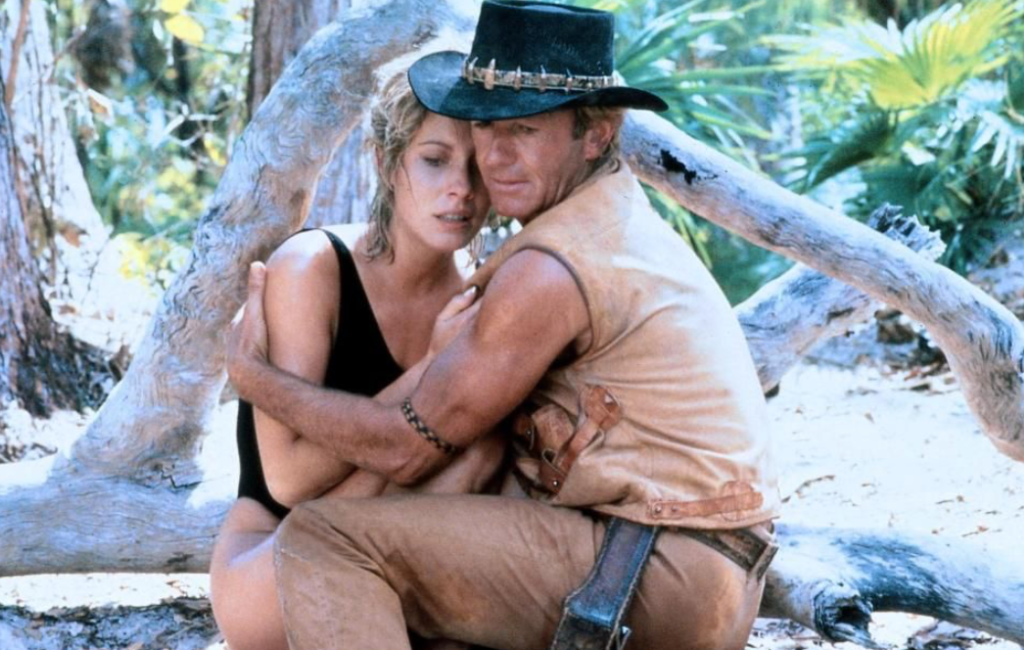
(By the way, I find it fascinating that the top two grossing films of that same year, Top Gun and Crocodile Dundee, were both centered on an extremely masculine male hero that proves his valor and wins the heart of the free-spirited beauty who still needs him in the end. Interesting, huh? But I digress.)
These studies don’t seem to take into account the recent so-called redefinition of legal marriage in the US, which throws much of the data on ‘spouses’ and ‘partners’ into confusion, to say the least. Without opening up that whole can of worms just yet, let’s just say that the reported numbers of people who are married in the Biblical sense are probably even lower than we imagine when we hear numbers like the ones above.
The low numbers of marriage or romantic partnerships are the by-product of a more fundamental trend: young people no longer date. They don’t know how. They ‘hang-out’ and they ‘hook-up.’ A few may eventually ‘move-in’ only to move out again. The idea of dating the way their parents or even some of their older siblings did as lately as the 1990s is somehow out of the question.
The sad fact is, our increasingly atomized, socially awkward, politically frought, technology dominated society no longer provides an effective framework for changing one’s ‘status’ from single to married. You can sign up to on online dating app (and I do encourage this), but an actual relationship, of the kind that leads to commitment and marriage, doesn’t happen by the mere push of a button (or swipe of a touch screen). Last time I checked, arranged marriages are no longer a reality in Christendom (although it got to a point for me in my single life where I sort-of wished they were). Dating, as opposed to aimlessly ‘hanging-out’ or fruitlessly ‘hooking-up’ seems unreal to this generation. Dating is something that happens in 80’s movies and in older TV shows, like Seinfeld, but not in real life. It was a challenge to me, trying to figure out how to date–even though I’m old enough to remember being properly ‘asked-out’ and taken on actual dates when I was in high school back in the 90’s.
Somewhere in that 10 year period, between when I graduated in 2000 and when I was willing to get really serious about finding a marriage partner, the societal landscape drastically changed. The biggest culprit is of course, technology. I’ve got so much to say about that I’ll have to save it for another time. Suffice it to say that the way we behave now is drastically different from the days when a boy could walk up to a girl he found attractive and ask her out to a movie.
There is also the albatross of the ‘me generation‘—50 years of families torn apart by rampant divorce, starting with the passage of ‘no-fault divorce’ laws in the 1960s. A whole generation of people are more or less traumatized from their parents’ history of divorce and consequently terrified of relationship failure. I myself am the product of a second marriage, and I can tell you I grew up in fear of my parents getting divorced every time they argued. It had happened before after all.
Add that to the burden of the now ubiquitous availability of intense, highly addictive porn, which takes the wind out of the sails of both men and women, and causes even more confusion about what real relationships look like.
Then there’s the widespread belief among young women that having sex before marriage is not only okay, it’s a must. Women have swallowed the diabolical lie that ‘sowing one’s wild oats,’ to use the old expression, somehow makes women powerful. In fact the opposite is true. Rather than keeping their standards and protecting their virtue, which in turn encourages decent men to strive to win a woman’s trust by making a commitment to them, women are now taught they they need to be ‘sexually active.’ So many women fall victim to the lie that if they don’t have sex with whomever they find attractive, they are missing out on some kind of confidence or maturity. The tragedy is, this behavior not only robs a women of genuine self-esteem, it virtually guarantees a string of broken relationships that cause both humiliation and heartache, which leads to increasingly immature and diffident behavior.
The plan that this society has given us does not work. We in this generation have to do it for ourselves. This is especially true for Catholics. Why? Because we have absolute moral boundaries to which we must adhere, or lose our souls. These are non-negotiable. We certainly can’t participate in ‘hook-up’ culture, nor do we want to. This is to our great advantage, in some respects. We know the truth about what not to do. Yet knowing this is not enough, if we want to be happy.
Seeing the destructiveness of these widespread practices amongst the general population, many Catholics have come to associate ‘dating’ with inappropriate and unchaste behavior. So they don’t bother with it all. Yet, if we are going to change the game, we have to find another way. We have to re-educate ourselves so we can win at this thing.
It’s not going to happen by distracting ourselves with endless entertainment or work; or by clinging to the pleasant fantasy of a religious vocation, when in reality, it’s more about avoiding what we need to do to grow up. We, as a generation, have to wake up and meet the challenges of our own day. We must come to grips with the disadvantages our broken culture has handed us, so we can get to the important work of overcoming them.
We Catholics must date. We must become absolutely conscious of what dating means, and what it does not mean; how to do it and why we’re doing it—even more than the rest of society. We have to blaze a trail and do things differently from our peers. We also need to go ahead and have some fun while we’re at it. Attraction doesn’t much grow in an atmosphere of gloom and anxiety. In this area of life, as in nearly every other, we have to be countercultural.
I will address exactly what dating means for us, and what it doesn’t mean, in the next part of this series. I’ll also explain exactly what I did to learn how to date, and how I learned to do it in a way that was compatible with my Catholic faith.
If you couldn’t tell already, mine is the story of a real screw-up who seemed to have very little chance of figuring it all out, much less doing it right. Yet, I did figure it out, with God’s help, and I got to the alter—with my faith in one piece, too. In fact, I grew in holiness through the very process of dating. I know you can too, if you’re willing to set-aside whatever it is you think you know about the concept of dating, give it all to God, and get to work.
 Grow Up and Marry!